|
Getting your Trinity Audio player ready...
|
Living in a small home or apartment doesn’t mean your living room has to feel tight and cramped. With a few smart design tricks, you can turn a small space into a room that feels open, airy, and welcoming. Whether you’re renting a cozy flat or living in a compact house, these practical ideas will help you make the most of every inch. From choosing the right colors to arranging your furniture wisely, these tips will create the illusion of a larger, more comfortable living room. Let’s dive into these simple strategies that can make your room look bigger almost instantly.
1. Embrace Light Colors for Walls and Furniture
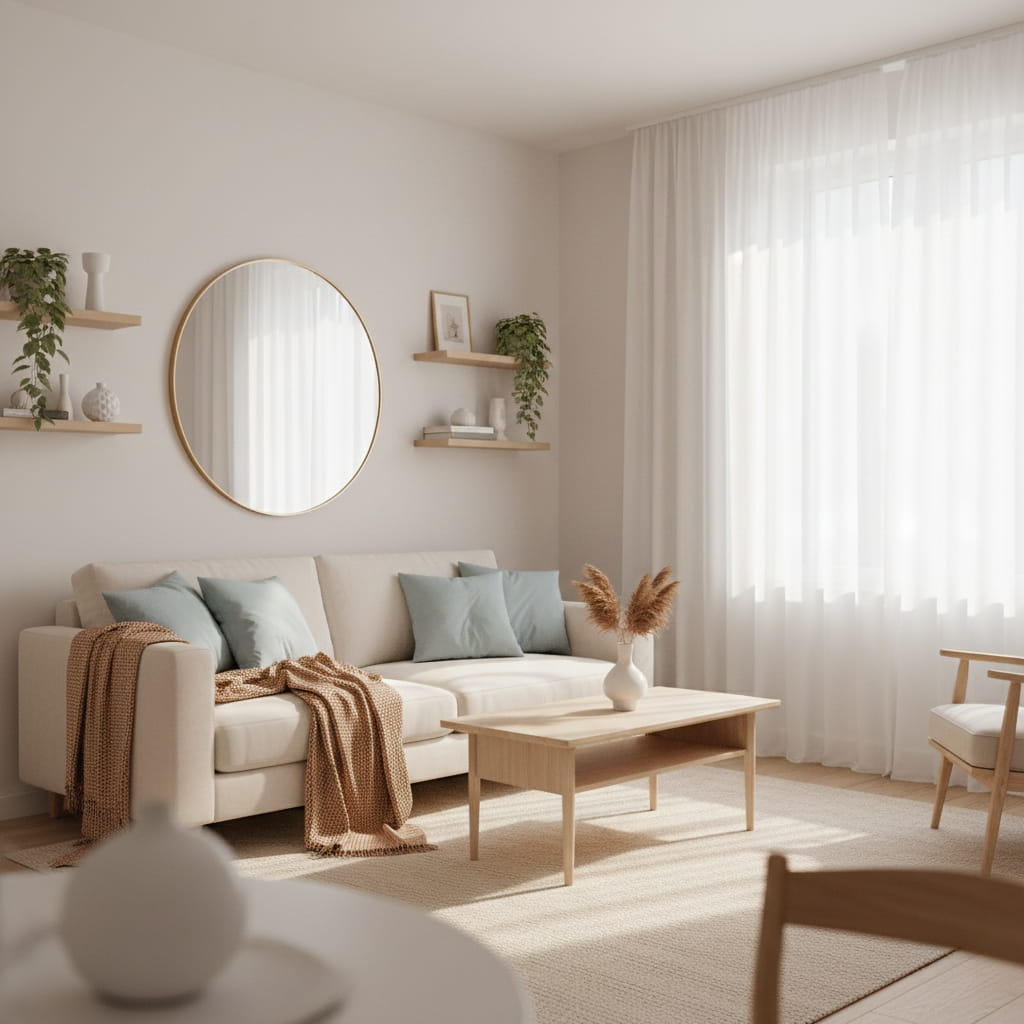
One of the most powerful ways to make a small living room feel bigger is to use light colors. Shades like white, cream, soft gray, and pastels reflect more light than dark tones, which makes the room feel brighter and more open. Light walls visually push the boundaries of the room outward, so it doesn’t feel boxed in or heavy.
How to apply this trick:
- Choose a light wall color: Go for off-white, light beige, pale blue, or other soft, airy shades. If you’re worried the room will feel too cold or plain, add warmth through cozy textures, cushions, throws, and wooden accents.
- Incorporate light furniture: Pick sofas, chairs, and tables in neutral or light tones. Heavy, dark furniture can dominate a small room and make it feel even smaller.
- Use a monochromatic scheme: Keep your walls, furniture, and decor within a similar color family. This creates a seamless look that feels calm and uncluttered.
Pro Tip: Love bold colors? Use them in small doses—like in throw pillows, art, or a single accent chair—so they add personality without overwhelming the space.
2. Utilize Mirrors to Reflect Light and Space
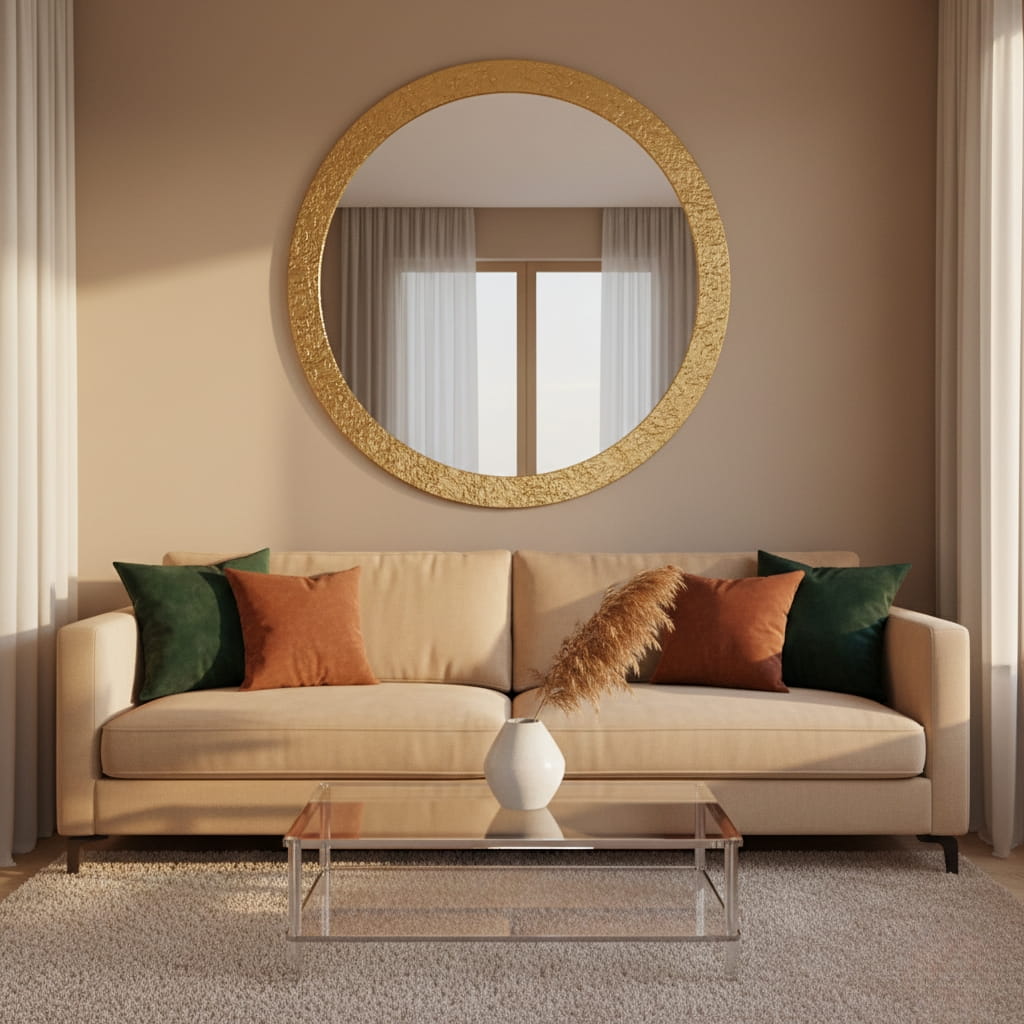
Mirrors are one of the easiest and most effective tools for opening up a small room. They bounce light around, create reflections, and give the illusion of extra depth. A well-placed mirror can make it feel like there’s another window or even another part of the room.
How to apply this trick:
- Hang a large mirror: Place a big mirror on a focal wall—above the sofa, behind a console, or opposite a window—to reflect natural light and visually expand the room.
- Use mirrored furniture: A mirrored coffee table, sideboard, or side table adds a touch of elegance while also reflecting light and nearby objects.
- Create a mirror gallery wall: Combine smaller mirrors in different shapes and frames to create a stylish feature that also makes the space look larger.
Pro Tip: Position mirrors so they reflect something attractive, like a window view, plants, or a beautiful artwork, rather than clutter.
3. Opt for Multi-Functional Furniture
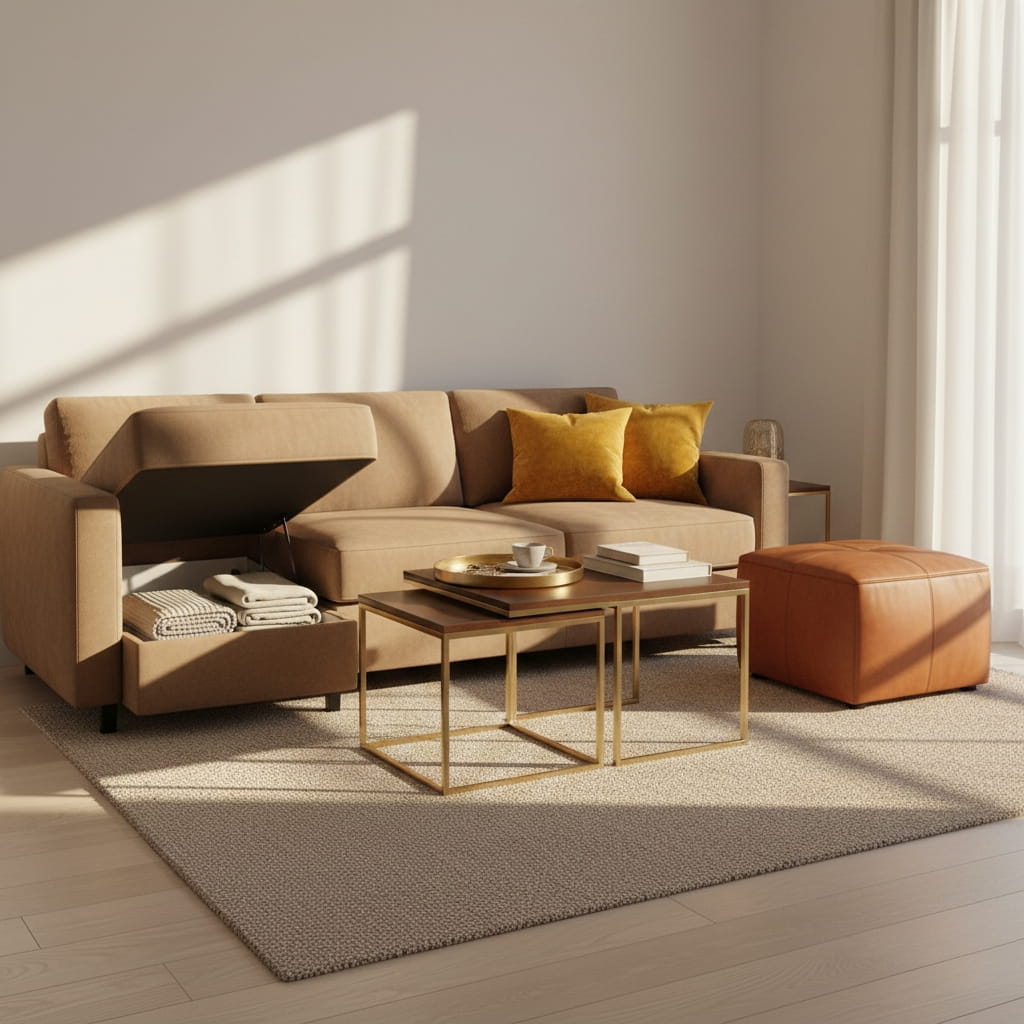
In a small living room, every piece needs to earn its place. Multi-functional furniture helps you save space and reduce visual clutter, so the room feels more open and organized. The right pieces can give you storage, seating, and style all at once.
How to apply this trick:
- Invest in a storage ottoman: Use an ottoman that can act as a coffee table, footrest, and extra seat while hiding blankets, remotes, toys, or books inside.
- Choose a sofa bed: A sofa that converts into a bed is ideal if you have guests over or live in a studio or small apartment.
- Use nesting tables: Nesting side tables slide under each other when not in use and spread out only when you need extra surface space.
Pro Tip: Look for furniture with slim legs, clean lines, and simple designs. Bulky, overstuffed pieces can make a small room feel crowded and heavy.
4. Maximize Vertical Space
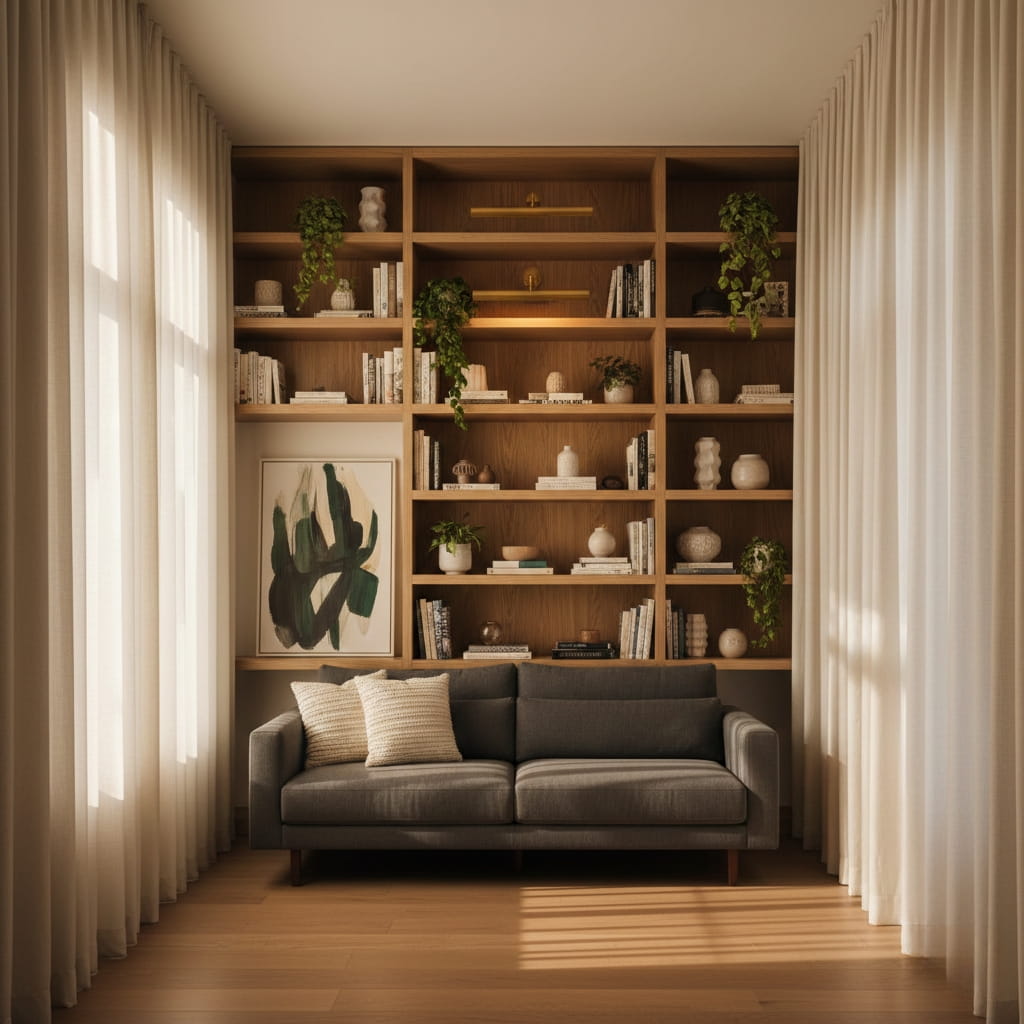
When floor space is limited, think upwards. Using the height of your walls draws the eye up and makes the room feel taller and more spacious. Vertical storage and decor also help keep the floor clear, which is key in a small living room.
How to apply this trick:
- Install floating shelves: Wall-mounted shelves are perfect for books, decor, and plants without taking up floor space.
- Hang tall curtains: Mount curtain rods closer to the ceiling and let the curtains fall all the way to the floor. This elongates the walls and makes the room feel taller.
- Use vertical artwork: Choose tall, narrow art pieces or arrange a vertical gallery wall to guide the eye upward.
Pro Tip: Keep shelves and vertical storage neat and edited. Overloading them will make the room look busy instead of spacious.
5. Let in Natural Light
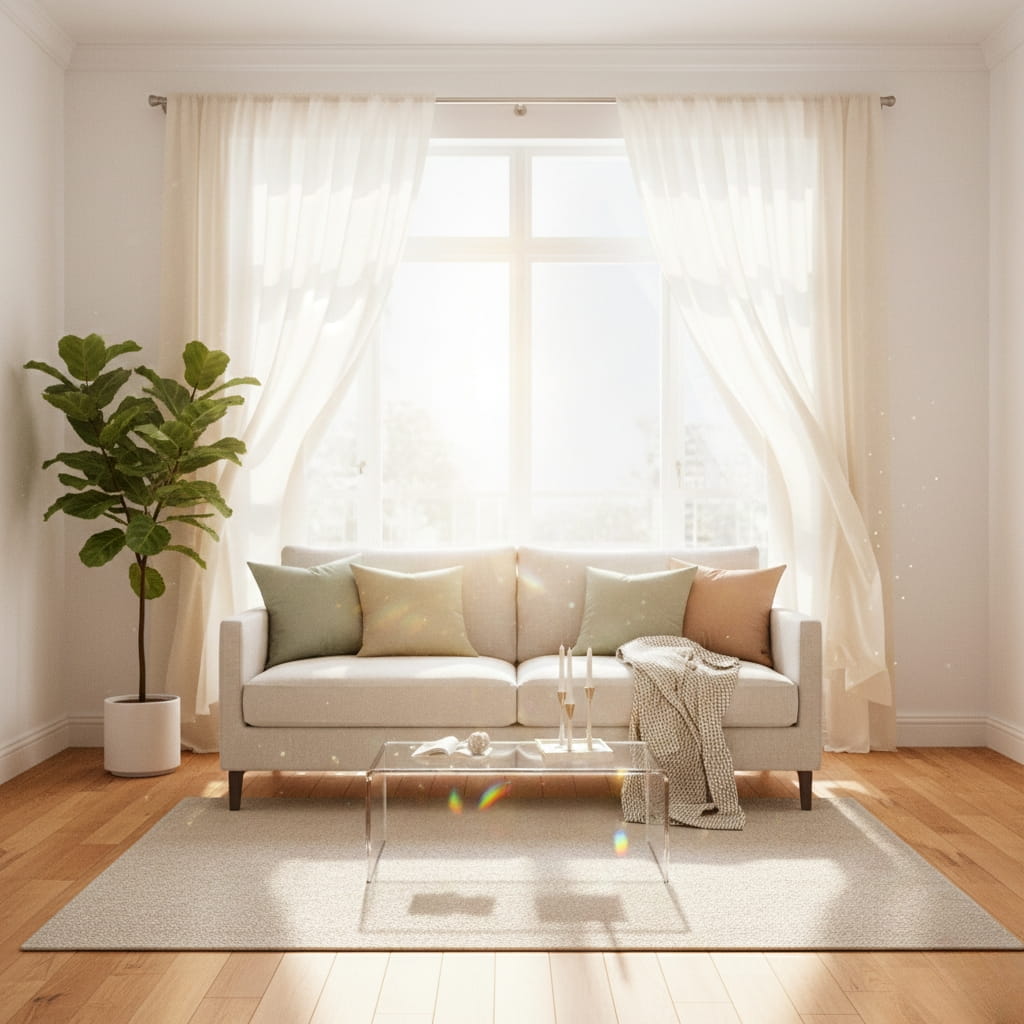
Natural light can completely transform a small living room. It brightens the space, softens corners, and makes everything feel more open and inviting. The more light you allow in, the bigger and fresher your room will look.
How to apply this trick:
- Use sheer curtains: Swap heavy, dark drapes for sheer or light-filtering ones that allow daylight to pass through while still giving you privacy.
- Keep windows unobstructed: Avoid placing big furniture directly in front of windows. Even low furniture can block valuable light.
- Keep windows clean: It sounds simple, but clean glass lets more light in and makes a noticeable difference in brightness.
Pro Tip: If your living room doesn’t get much natural light, layer warm, soft artificial lighting with floor lamps, table lamps, and wall lights to mimic a bright, sunny feel.
6. Declutter and Simplify
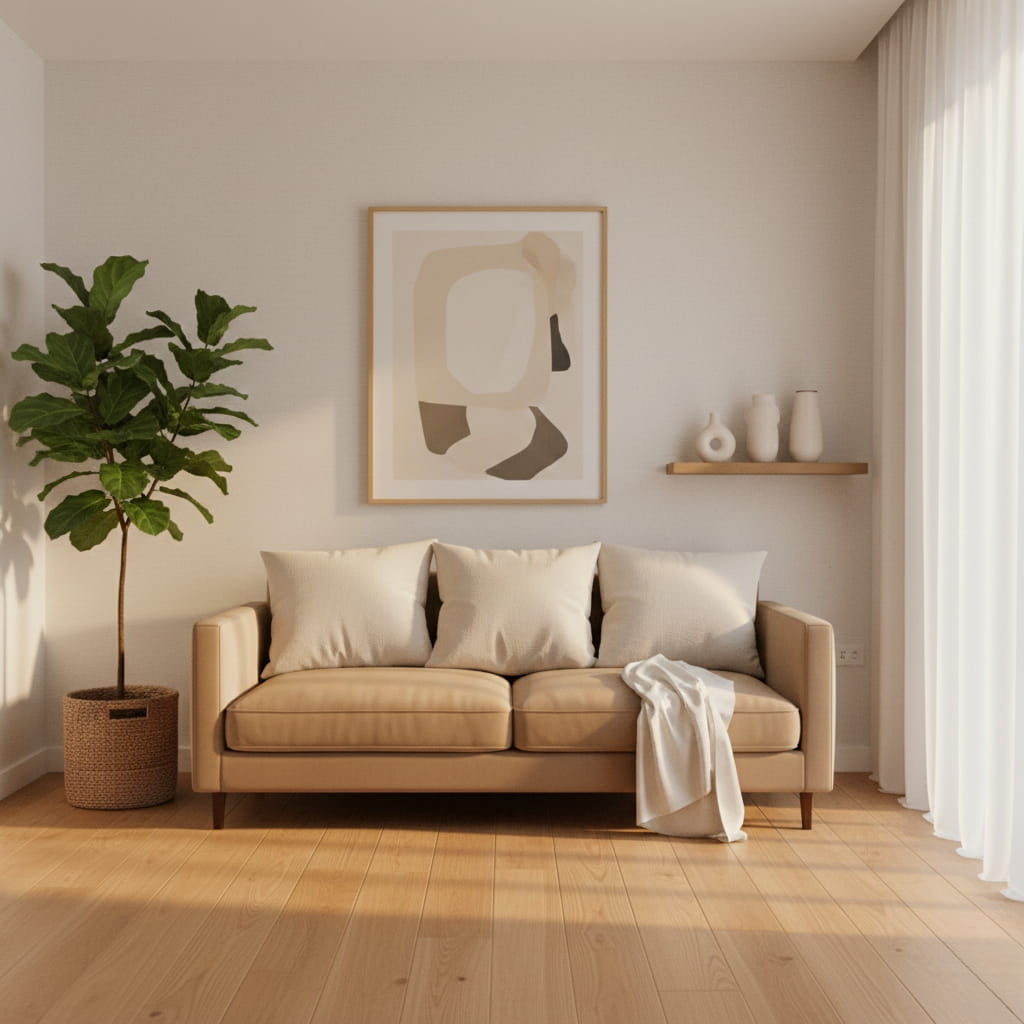
Clutter instantly makes any room feel smaller and more stressful. In a small living room, too many items—decor pieces, extra furniture, random stuff—can quickly overwhelm the space. A simplified, thoughtfully styled room always feels larger, calmer, and more relaxing.
How to apply this trick:
- Remove what you don’t need: Keep only what you actually use or truly love. Donate, store, or sell items that are just taking up space.
- Use hidden storage: Baskets, stylish boxes, storage benches, and closed cabinets can hide everyday clutter and keep surfaces clear.
- Limit decor: Instead of many tiny items, choose a few statement pieces, like one large plant, a bold rug, or a single eye-catching artwork.
Pro Tip: Make it a habit to regularly check your living room. Put things back in their place and clear out items that have slowly built up over time.
7. Use Strategic Furniture Placement
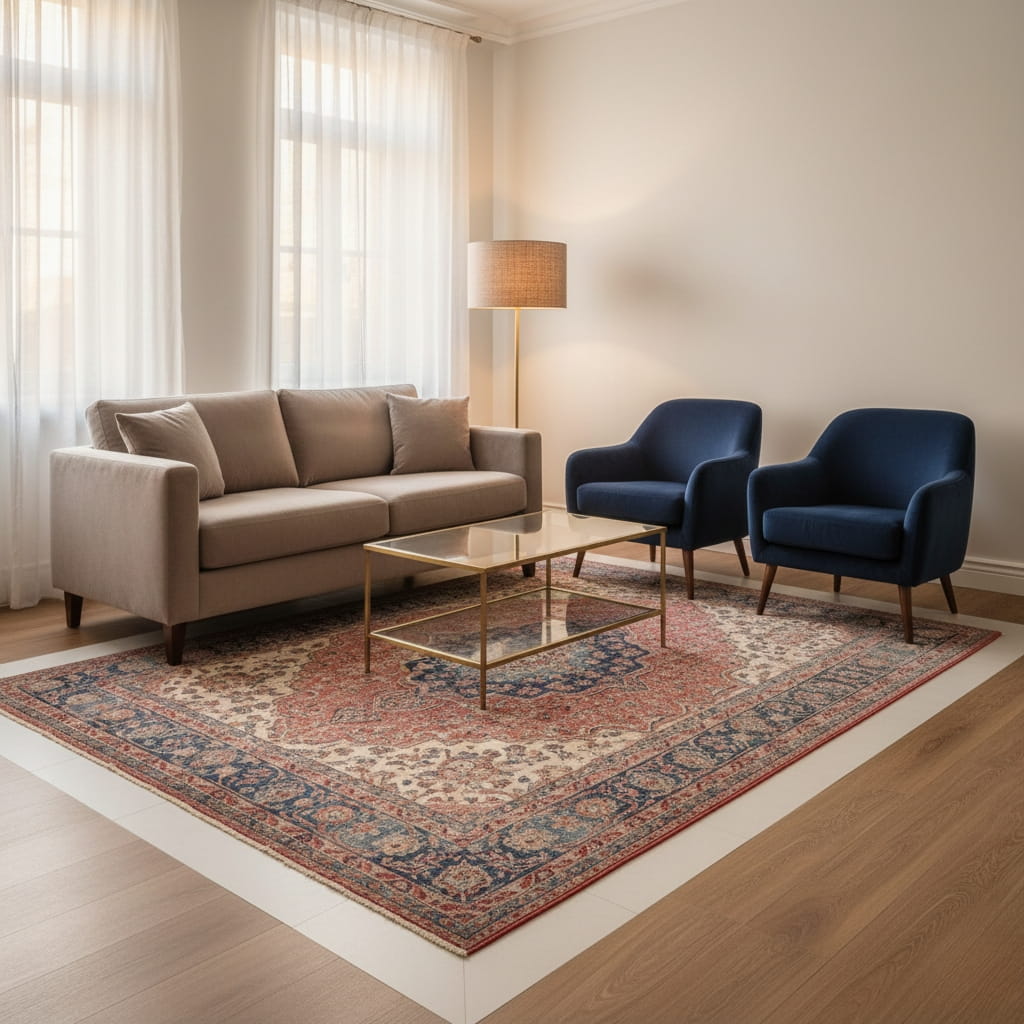
How you arrange your furniture can either open up a room or make it feel blocked and cramped. Thoughtful placement improves flow, highlights open floor space, and makes the room feel more comfortable and larger.
How to apply this trick:
- Pull furniture slightly away from walls: Pushing everything flat against the walls can actually make a room feel smaller. Floating your sofa or chairs just a little bit can create a cozy, intentional seating area.
- Choose furniture that fits the room: Instead of one huge sofa, consider a small sectional, loveseat, or compact armchairs. The right proportions make a huge difference.
- Create clear pathways: Make sure there’s enough room to walk around easily without bumping into furniture.
Pro Tip: Use a rug to visually anchor your seating area. Just make sure it’s the right size—too big can overwhelm the room, and too small can look awkward and disconnected.
8. Choose the Right Rug and Pattern
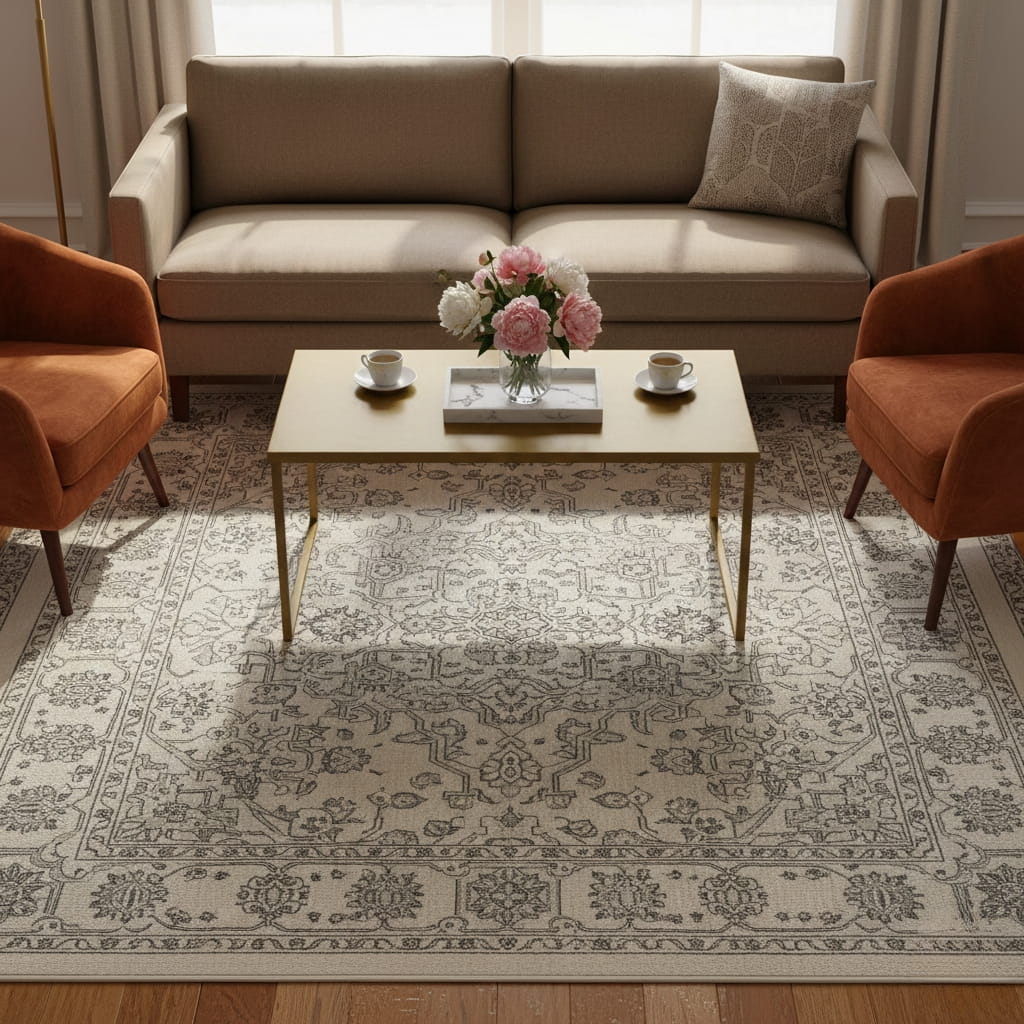
Rugs can either help a room feel larger or cut it up visually. The right rug will define your seating area without breaking up the space too much.
How to apply this trick:
- Go for lighter or soft patterns: Light or subtle patterns keep the room open and airy. Busy, dark designs can make the floor feel heavy.
- Make sure the rug fits: Ideally, the front legs of your sofa and chairs should sit on the rug so everything feels connected.
- Use stripes wisely: A striped rug can visually stretch the room. Horizontal stripes can make the room feel wider, while vertical stripes can make it feel longer.
Pro Tip: Avoid lots of small rugs in one room. One good-sized rug usually makes the space feel bigger and more pulled together.
9. Add Glass, Acrylic, and Open-Style Pieces
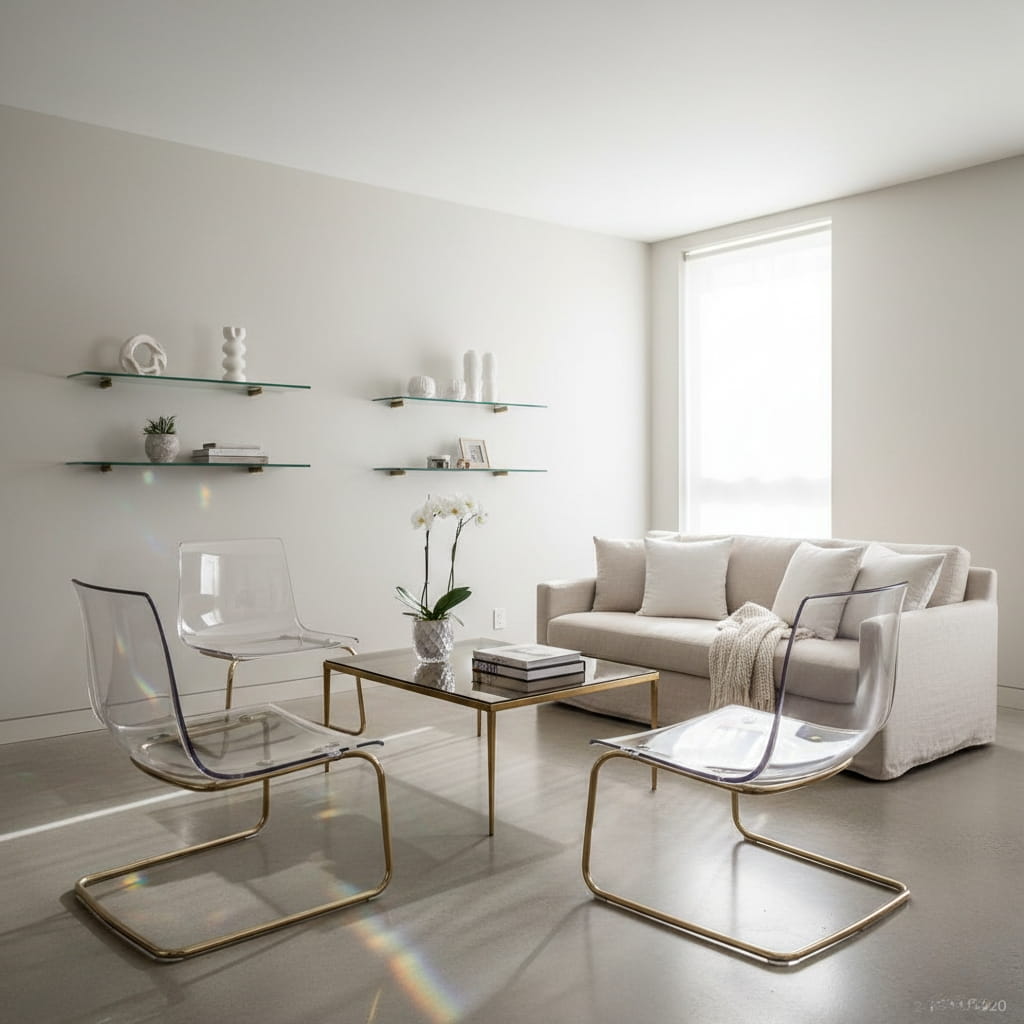
Furniture that you can see through takes up less visual space, which helps a small living room feel lighter and less crowded.
How to apply this trick:
- Use a glass coffee table: It gives you function without blocking the view of the floor, which makes the room feel more open.
- Try acrylic chairs or side tables: Clear pieces almost “disappear” in the room while still being useful.
- Opt for open bases: Sofas and chairs with visible legs and open bases look lighter than pieces that sit flat on the floor.
Pro Tip: Mix one or two transparent pieces with your existing furniture for a more airy, modern look without changing everything.
10. Add Character Without Adding Bulk
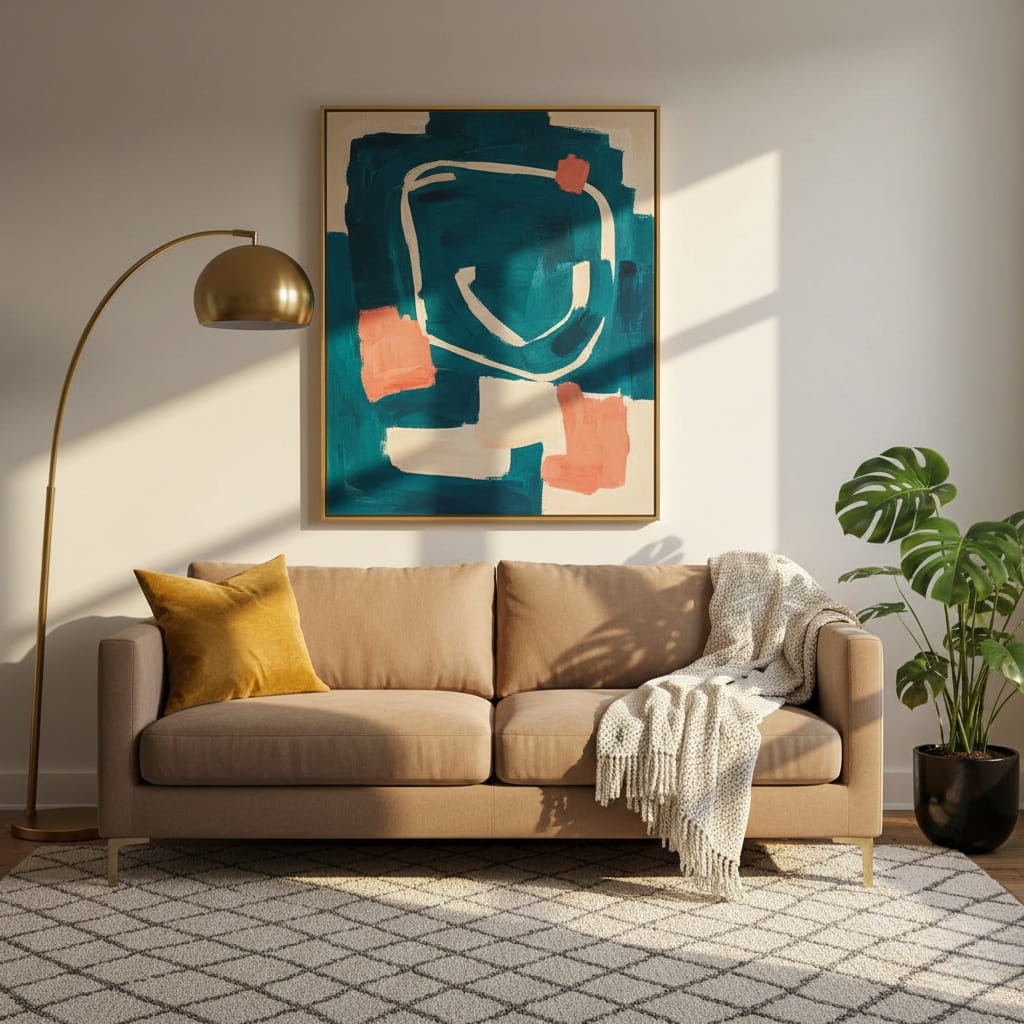
Even in a small space, you still want your living room to feel cozy and full of personality. The key is to add character in ways that don’t take up much physical or visual space.
How to apply this trick:
- Use a few standout pieces: A unique lamp, a beautiful artwork, or a large plant can add style without crowding the room.
- Layer textures instead of objects: Think soft throws, cushions, woven baskets, and natural materials that add warmth and interest without clutter.
- Keep a cohesive style: When your colors and decor style feel consistent, the room looks more calm and spacious.
Pro Tip: Think “less but better.” A small number of well-chosen items will always look bigger, cleaner, and more expensive than lots of random decor.
Conclusion
By using light colors, mirrors, multi-functional furniture, vertical space, natural light, decluttering, smart furniture placement, the right rug, airy materials like glass, and a few carefully chosen details, you can transform a small living room into a space that feels bright, open, and stylish—without any major renovation.